
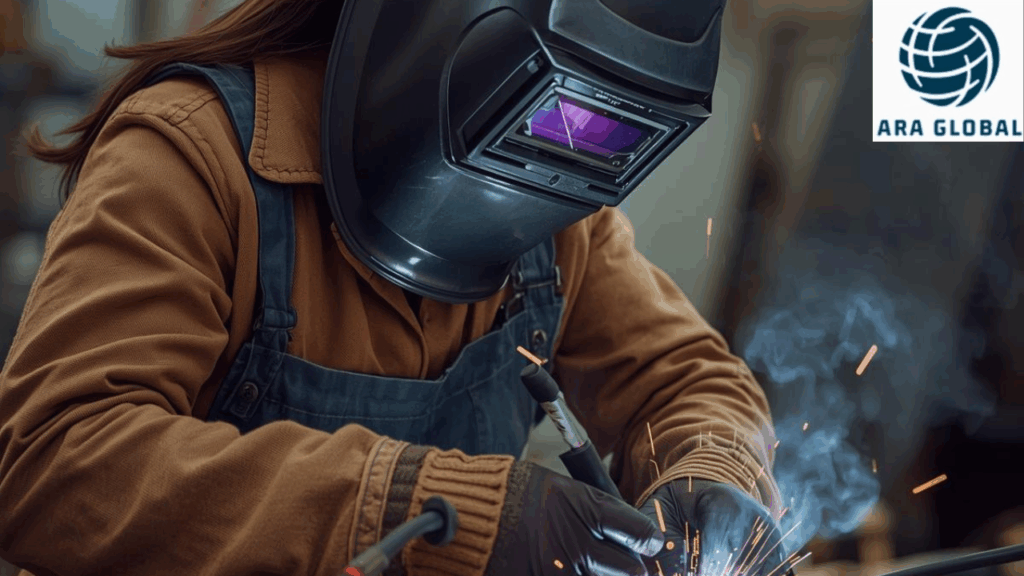
ARA Global Safety Training Solutions play a critical role in helping organizations reduce risks and strengthen workplace safety. Welding is one of the most hazardous industrial activities, and without proper precautions, workers face serious dangers such as burns, electric shocks, gas-related incidents and falling materials. This article highlights key welding safety practices that help workers stay safe and organizations remain compliant.
Ensure Equipment Is in Proper Condition
Before beginning any welding task, verify that the welding machine is grounded and in good working order. Examine the handle or holder for cracks or damage. Check all cables for exposed conductors or worn insulation. Replace any defective equipment immediately to prevent electrical hazards.
Avoid Contact With Wet Surfaces
One important practice in welding safety is maintaining dry hands, clothing and gloves. Keep exposed metal parts of the welder, handles and electrodes away from moisture. Never change electrodes with bare hands or while wearing wet gloves, as this increases the risk of electric shock.
Follow Safe Cylinder Handling Procedures
Many welding and cutting operations use compressed gas cylinders, which must be handled with care. Always follow your organization’s approved procedures for transporting, storing and securing cylinders. Keep safety caps in place and ensure cylinders remain properly chained or supported during movement and use.
Protect Against Burns
Burns are among the most common injuries in welding. Think through the weld you plan to perform, including your body position and the direction slag will fall. Wear approved protective clothing such as gloves, goggles, face shields, aprons and flame-resistant coverings to protect your skin from sparks and heat.
Secure Materials Before Cutting
Injuries often occur when heavy materials shift or fall during welding or cutting. Secure all materials before beginning work and understand how each piece will move once it is cut. Planning ahead helps prevent accidents and keeps both workers and surrounding equipment safe.
Prevent Trips and Falls
Like any work environment, welding areas can contain tripping hazards. Before starting work, clear your path, remove unnecessary objects and ensure the workspace is well organized. Good housekeeping greatly reduces the risk of slips, trips and falls.
Conclusion
Strong welding safety practices help workers remain protected and ensure organizations maintain high compliance standards. By implementing proper inspections, using correct protective equipment and following safe handling procedures, industries can reduce accidents and build safer workplaces. With the support of ARA Global Safety Training Solutions, organizations can strengthen welding awareness, improve operational safety and promote a culture of responsible work practices.
