
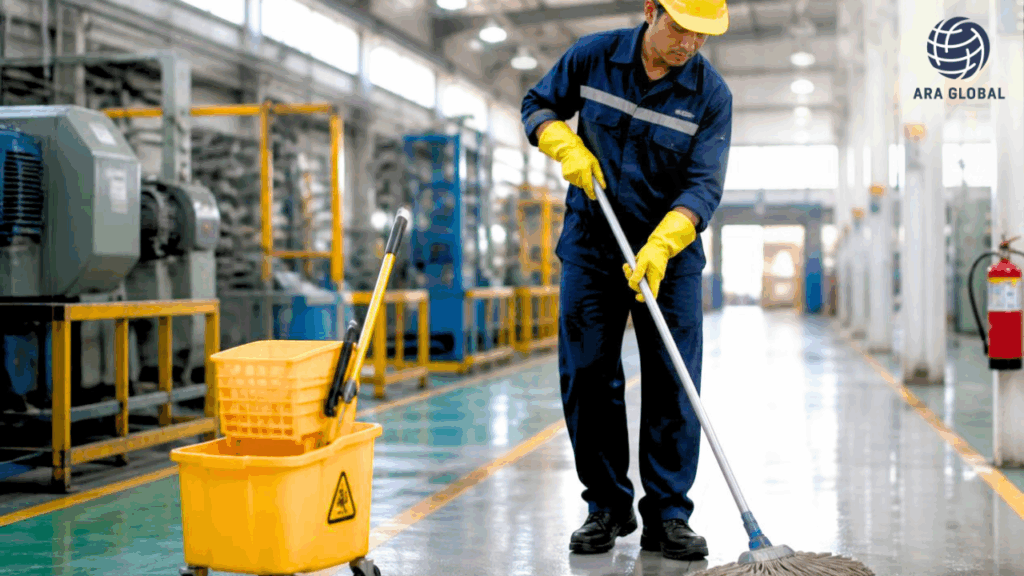
A clean workplace is not automatically a safe workplace. However, good industrial housekeeping safety can prevent many everyday hazards before they turn into injuries. Oil spills, loose cables, scrap materials, blocked walkways, and poorly stored tools can quickly create unsafe conditions in factories and industrial workplaces.
Employees may walk past these issues every day without noticing them. Therefore, housekeeping needs to become part of normal work, rather than something teams focus on only before an inspection.
Good workplace housekeeping also makes it easier for employees to move, work, and respond during emergencies. With clear responsibilities and regular checks, companies can maintain safer and more organized work areas.
Why Housekeeping Matters at Work
Housekeeping affects much more than appearance. A poorly maintained work area can create slip, trip, fire, falling-object, and access hazards.
For example, a small oil spill near a machine may seem insignificant. However, an employee could slip while carrying a heavy component and suffer a serious injury.
Similarly, materials left in an emergency pathway can delay evacuation during a fire or other emergency.
That is why industrial housekeeping safety should form part of your wider workplace safety program.
Common Housekeeping Hazards
Before improving housekeeping, identify the problems that appear regularly in your facility.
Look for:
- Oil, water, or chemical spills
- Scrap materials left on floors
- Loose electrical cables
- Blocked walkways
- Poorly stacked materials
- Unnecessary tools around machines
- Waste accumulating near workstations
- Dust and combustible materials
- Poorly maintained storage areas
These conditions can develop gradually. Therefore, supervisors and employees should identify and correct them during daily operations.
Keep Walkways Clear
Walkways should remain clear throughout the working day.
Do not allow boxes, tools, cables, raw materials, or waste to accumulate in areas where employees need to walk.
Clear walkways reduce trip hazards and also make it easier for employees to reach emergency exits quickly.
Meanwhile, supervisors should check frequently used paths during routine workplace housekeeping inspections.
Control Spills Immediately
Spills should never become a “clean it later” task.
Employees should know how to report and safely manage spills based on the material involved. Chemical spills may require specific procedures, PPE, and trained personnel.
For ordinary workplace spills, teams should place appropriate warning signs or barriers while they arrange safe cleanup.
Quick action supports industrial housekeeping safety and reduces unnecessary exposure to hazards.
Store Materials the Right Way
Poor storage creates risks that can affect employees long after materials arrive at the facility.
Heavy items should remain stable and suitable for the storage system. Keep frequently used materials within safe reach and avoid stacking items where they can fall.
Also, separate incompatible chemicals and store hazardous substances according to the required safety controls.
Good storage practices make workplace housekeeping easier to maintain because employees have a clear place for everything.
Manage Waste and Scrap
Manufacturing activities can generate metal scraps, packaging materials, dust, waste oils, and other debris.
If employees allow waste to build up around workstations, the area can quickly become difficult to navigate.
Provide suitable waste containers close to where waste is generated. Then, establish clear responsibilities for emptying and maintaining those containers.
This simple approach can make daily industrial housekeeping safety much easier to manage.
Keep Emergency Areas Accessible
Emergency exits, fire extinguishers, fire alarm points, electrical panels, and emergency equipment should remain accessible at all times.
Never use these areas as temporary storage spaces.
During an emergency, employees should not have to move materials before reaching essential safety equipment.
Therefore, emergency access should form an important part of every housekeeping checklist.
Make Employees Part of Housekeeping
Housekeeping should not belong only to cleaning teams.
Employees create and notice many of the conditions that affect workplace housekeeping. They can often correct small issues immediately or report problems before they become serious.
Encourage employees to return tools after use, remove waste promptly, report spills, and keep their workstations organized.
When everyone takes responsibility, housekeeping becomes part of the workplace culture.
Use a Practical Housekeeping Checklist
A simple housekeeping checklist can help supervisors and employees maintain consistent standards.
Review areas such as:
- Floors and walkways
- Machine surroundings
- Waste containers
- Material storage
- Electrical panels
- Emergency exits
- Fire equipment access
- Lighting
- Tools and equipment
- Spill control
- Workstation organization
The checklist should not simply identify problems. Assign responsibility for each issue and follow up until the team resolves it.
How Often Should You Check?
Daily housekeeping checks can catch problems before they become difficult to manage.
However, the frequency should match the workplace and its risks. A production area that generates large amounts of scrap may require checks several times during a shift.
Meanwhile, supervisors can use a more detailed housekeeping checklist during scheduled workplace inspections.
Regular review also helps identify recurring problems. If the same issue appears repeatedly, the company should investigate why it keeps happening.
Common Housekeeping Mistakes
Even companies with good procedures can develop poor habits.
Common mistakes include:
- Cleaning only before inspections
- Leaving spills until the end of a shift
- Using walkways for temporary storage
- Ignoring small housekeeping issues
- Giving housekeeping responsibility to only one team
- Failing to follow up on repeated problems
These habits weaken workplace housekeeping over time.
Instead, make housekeeping part of the normal workflow and address problems as soon as employees identify them.
Build Better Housekeeping Habits
The best housekeeping programs focus on prevention.
Give employees clear standards, provide suitable storage and waste facilities, and make supervisors responsible for regular checks.
Additionally, include housekeeping in safety training and workplace observations. This helps employees understand how everyday conditions can contribute to accidents.
Over time, consistent industrial housekeeping safety practices can reduce hazards while improving workplace organization and safety awareness.
Conclusion
Effective housekeeping is a simple but important part of accident prevention. When organizations control spills, maintain clear walkways, store materials correctly, manage waste, and review conditions regularly, they create a safer workplace for everyone.
At ARA Global, our experienced safety professionals help organizations strengthen workplace safety through practical training, workplace inspections, safety audits, risk assessments, and compliance support.
We focus on practical improvements that employees can understand and apply during their everyday work.
To strengthen your workplace safety and housekeeping practices, connect with ARA Global at sales@araglobalinc.com.
