
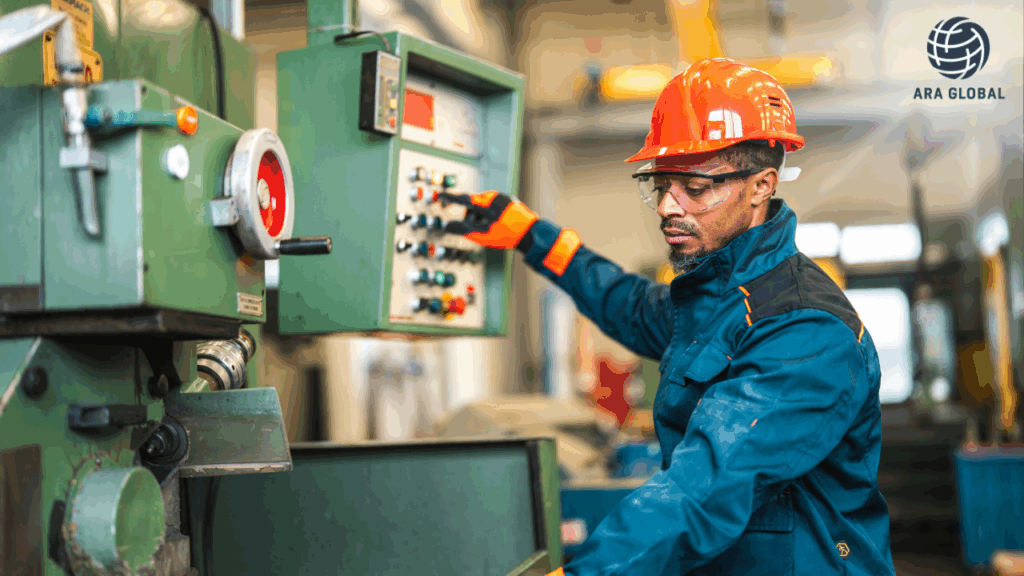
Machines make manufacturing faster and more efficient. However, they can also create serious risks when employees use them without proper safeguards. Machine safety violations often happen when guards are removed, procedures are skipped, or workers become too comfortable with familiar equipment.
The good news is that most of these issues can be identified before they cause an injury. Regular inspections, practical training, and strong supervision can help organizations identify machine hazards and correct unsafe practices early.
For manufacturing companies, industrial machine safety should not depend only on rules written in a manual. Employees need to understand the risks and know how to work safely around machinery every day.
What Are Machine Safety Violations?
Machine safety violations occur when employees, supervisors, or organizations fail to follow established safety requirements while operating, maintaining, or working near machinery.
Some violations may look minor at first. For example, an employee may remove a guard because it makes a task easier. Another worker may reach into equipment without following the required isolation procedure.
However, these shortcuts can expose workers to serious machine hazards, including cuts, crushing injuries, entanglement, burns, and amputations.
That is why organizations need a practical approach to industrial machine safety, rather than relying only on paperwork.
Removing or Bypassing Machine Guards
One of the most serious machine safety violations involves removing or bypassing machine guards.
Employees may remove guards to clear a jam, clean equipment, or complete a task faster. Unfortunately, exposed moving parts can cause severe injuries within seconds.
Companies should make sure guards remain securely installed during normal operation. If employees need to remove a guard for maintenance, they should follow the approved isolation and lockout procedure before starting the work.
Ignoring Moving Machine Parts
Rotating shafts, belts, gears, rollers, chains, and cutting tools can create dangerous contact points. Employees sometimes underestimate these machine hazards, especially when they work around the same equipment every day.
Therefore, training should focus on real workplace situations. Show employees where they could become caught, crushed, struck, or pulled into machinery. Practical awareness can make industrial machine safety much easier to understand.
Poor Lockout and Isolation Practices
Maintenance creates a different level of risk because workers may need to access hazardous machine components.
Simply switching off equipment does not always remove all sources of energy. Electrical, mechanical, hydraulic, pneumatic, thermal, or stored energy may still remain.
A proper isolation process should identify the energy source, isolate it, lock it out, and verify that the machine cannot restart before work begins.
Organizations should also train authorized employees on the correct procedure and review their practices regularly.
Failing to Report Damaged Equipment
A damaged guard, unusual vibration, exposed wiring, or malfunctioning emergency stop should never become “someone else’s problem.”
Yet employees may continue using equipment because they do not want to interrupt production. This creates unnecessary exposure to machine hazards.
Create a simple reporting process and encourage workers to report problems immediately. Supervisors should then assess the issue and take appropriate action before employees continue using the machine.
Skipping Routine Machine Inspections
A machine can appear to work normally while still developing safety problems.
Regular inspections can identify loose guards, worn components, damaged cables, faulty safety devices, and other concerns before they become serious.
During an inspection, look at both the equipment and the way employees interact with it. This approach gives organizations a clearer picture of their actual industrial machine safety performance.
Allowing Untrained Employees to Operate Equipment
Experience with one machine does not automatically qualify someone to operate another.
Employees need appropriate instruction before using unfamiliar machinery. Training should cover operating procedures, machine-specific hazards, emergency controls, PPE, and what to do when something goes wrong.
Refresher training also matters when equipment, processes, or workplace conditions change.
Poor Housekeeping Around Machines
Machine safety does not stop at the equipment itself. Oil spills, loose materials, tools, cables, and waste can create additional risks around operating machinery. Workers may slip, trip, or struggle to move safely during an emergency.
Therefore, good housekeeping should form part of every machine safety program.
How to Prevent Common Violations
A practical prevention strategy should focus on the way work actually happens.
Start by identifying machines with higher-risk operations. Then review guarding, isolation procedures, employee training, emergency controls, and inspection records.
Next, speak with employees who operate the equipment. Ask them about recurring problems, difficult procedures, and situations where workers feel tempted to take shortcuts.
Their answers can reveal machine hazards that a standard inspection may miss. Finally, track corrective actions and verify that teams have completed them.
Machine Safety Review Checklist
Before considering a machine safe to operate, review the following:
- Are all guards correctly installed?
- Can employees access dangerous moving parts?
- Do emergency stop controls work properly?
- Are isolation procedures clearly defined?
- Do maintenance employees understand lockout requirements?
- Can workers easily report damaged equipment?
- Are inspections completed at planned intervals?
- Have employees received machine-specific training?
- Are previous safety findings closed?
- Do operating procedures reflect current equipment?
This simple review can help organizations identify machine safety violations before they contribute to an incident.
Build a Stronger Machine Safety Culture
Rules alone cannot create safe behavior. Employees need to see supervisors taking machine safety seriously. Managers should respond to reported hazards, correct unsafe conditions, and avoid encouraging production shortcuts that compromise safety.
Moreover, recognize employees who report hazards or suggest practical improvements. This creates a workplace where workers feel comfortable speaking up.
Over time, consistent leadership, training, inspections, and follow-up can strengthen industrial machine safety across the organization.
Conclusion
Preventing machine safety violations requires more than installing guards and displaying warning signs. Manufacturing companies need to combine effective guarding, proper isolation, regular inspections, employee training, and strong supervision.
At ARA Global, we help organizations strengthen workplace safety through practical safety training, workplace audits, risk assessments, compliance support, and digital safety management solutions. Our approach focuses on helping teams identify risks and apply realistic controls in their daily operations.
If your organization wants to improve machine safety and reduce workplace risks, connect with ARA Global at sales@araglobalinc.com.
